EV Road Trip
EV Road Trip Cost Calculator
How much it costs — and how many stops — to road-trip any electric car on DC fast charging. Pick a car, set your trip distance, and see the cost vs charging at home and vs gas.
This trip's energy cost, by where you charge.
Both cars start full — this is the whole trip's fuel. The EV mixes cheap home miles with pricier DC miles; gas costs about the same per gallon wherever you fill, so its full starting tank doesn't change the total.
Your charging stops, in order
- Leave home — battery fullfirst ~217 mi covered, no charging
- Stop 1 — charge 10→80%at ~217 mi · ~31 min
- Stop 2 — charge 10→58% (enough to arrive)at ~385 mi · ~21 min
- Arrive500 miles total
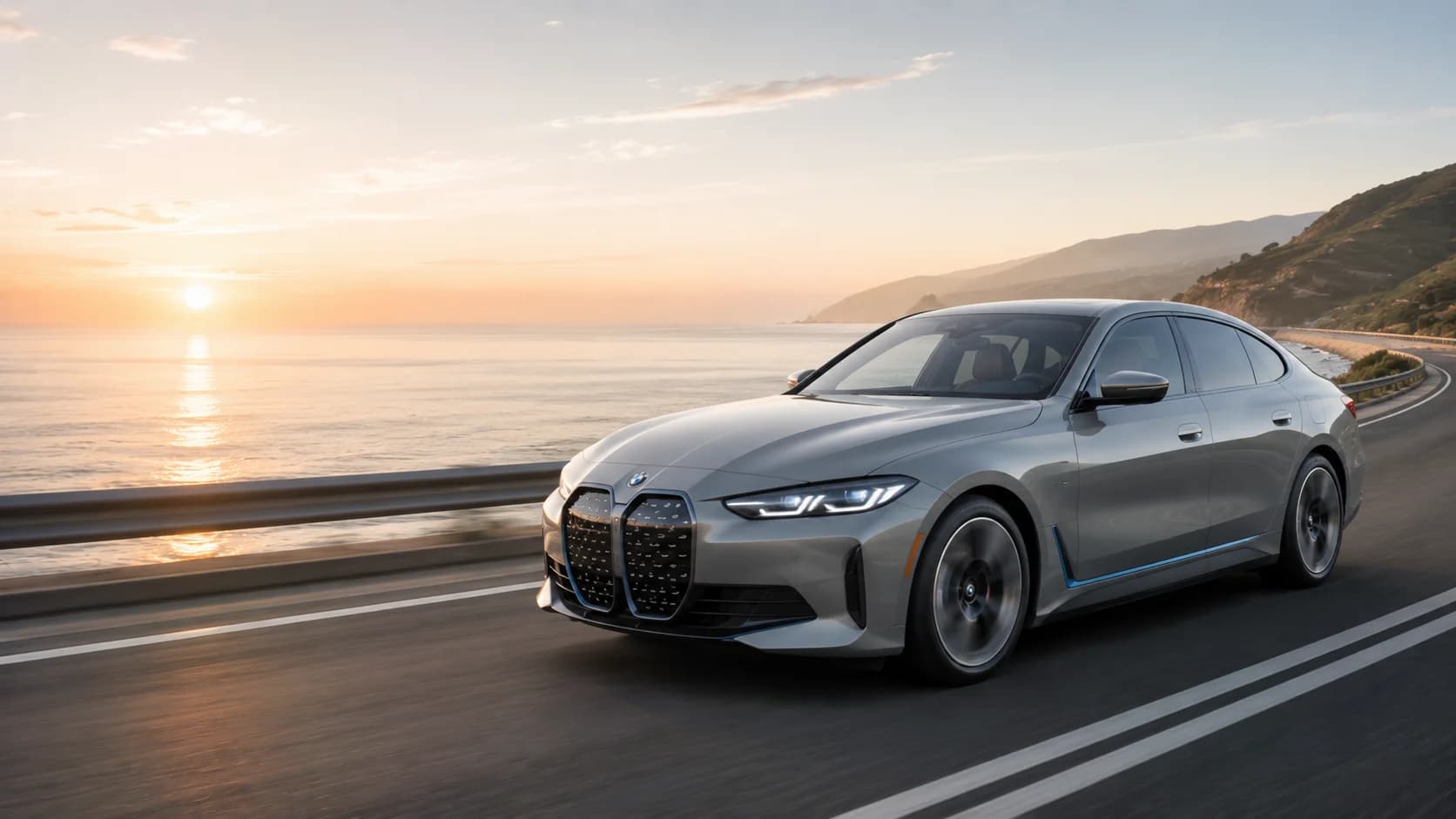
→ See the full 2026 BMW i4 charging page→ What the 2026 BMW i4 really costs to own→ Calculate home charging cost for this EV
Estimates use real battery and EPA range specs. Gas comparison assumes 30 mpg. Home cost uses the U.S. average residential electricity rate.
Example: a 2026 Tesla Model Y on a 500-mile road trip
Leaving home with a full battery, a 2026 Tesla Model Y covers about the first 231 miles on cheap home electricity, then needs 2 fast-charge stops and roughly $36 in DC fast charging at the U.S. public average (~$0.50/kWh). The same 500 miles in a 30 mpg gas car costs about $75 in fuel. Pick your own car and trip distance above for its exact cost, number of stops, and charge time.
How it works
- Highway range = 0.80× EPA range — accounts for highway speeds and aerodynamic drag; never estimated.
- Trip is planned starting with a full battery; each stop charges 10→80%, the optimal window for DC fast-charging speed.
- Gas comparison uses a 30 mpg baseline at AAA national average prices.
- Charge time uses each car's published 10→80% time on a high-power charger (V3/V4 Supercharger or 350 kW CCS) — if not published on a comparable basis, cost and stops are shown without a time estimate.
- All costs and times are built from real battery and EPA specs, never estimated.
Frequently asked questions
- How much does it cost to fast-charge an EV on a road trip?
- It depends on the car and the distance. Public DC fast charging averages around $0.50/kWh (Electrify America, Tesla Supercharger). Since you leave home with a full battery, you only fast-charge the miles beyond the first leg — for a 500-mile trip that's typically about $40–$90 at the chargers, more for big, thirsty EVs and less for efficient ones. The calculator shows the exact figure, the number of stops, and how it compares with gas and with charging at home.
- Is it cheaper to road-trip an EV or a gas car?
- Often a bit cheaper — but it depends on the EV. To be fair, assume both cars start full: the EV leaves on cheap home electricity (~$0.18/kWh) and only fast-charges the rest, while a gas car pays about the same per gallon wherever it fills. So an efficient EV's road trip usually runs a little under a 30 mpg gas car, while a thirsty EV charged mostly on ~$0.50/kWh DC can match or exceed it. The bigger EV savings always show up when you can charge at home. The chart shows the whole trip's fuel both ways.
- How many charging stops will I need on a long trip?
- The calculator uses 0.80× the EPA highway range to account for real-world highway speeds and aerodynamic drag. It then plans 10→80% charging sessions — the optimal window for DC fast-charging speed — and spaces stops so you arrive at each charger with a comfortable buffer. A 500-mile trip in a 300-mile-range EV typically needs one or two stops; a 250-mile-range EV may need two or three.
- How long do the charging stops take?
- Charge time shown is per 10→80% session using each car's published DC fast-charge time on a compatible high-power charger (V3/V4 Supercharger or 350 kW CCS). Most modern EVs complete a 10→80% session in 20–45 minutes. If a car's time isn't published on a comparable basis, the calculator shows cost and stops without a time estimate. An older 150 kW stall or a cold battery will be slower than shown.