Home Charging
EV Charging Cost Calculator
What any electric car costs to charge at home — and how long it takes. Pick a car, your state, and your mileage.
Empty → full charge time
The 11 kW onboard charger is the ceiling — past the highlighted Level 2 setup, a bigger circuit charges no faster. Highlighted bar is the recommended home setup.
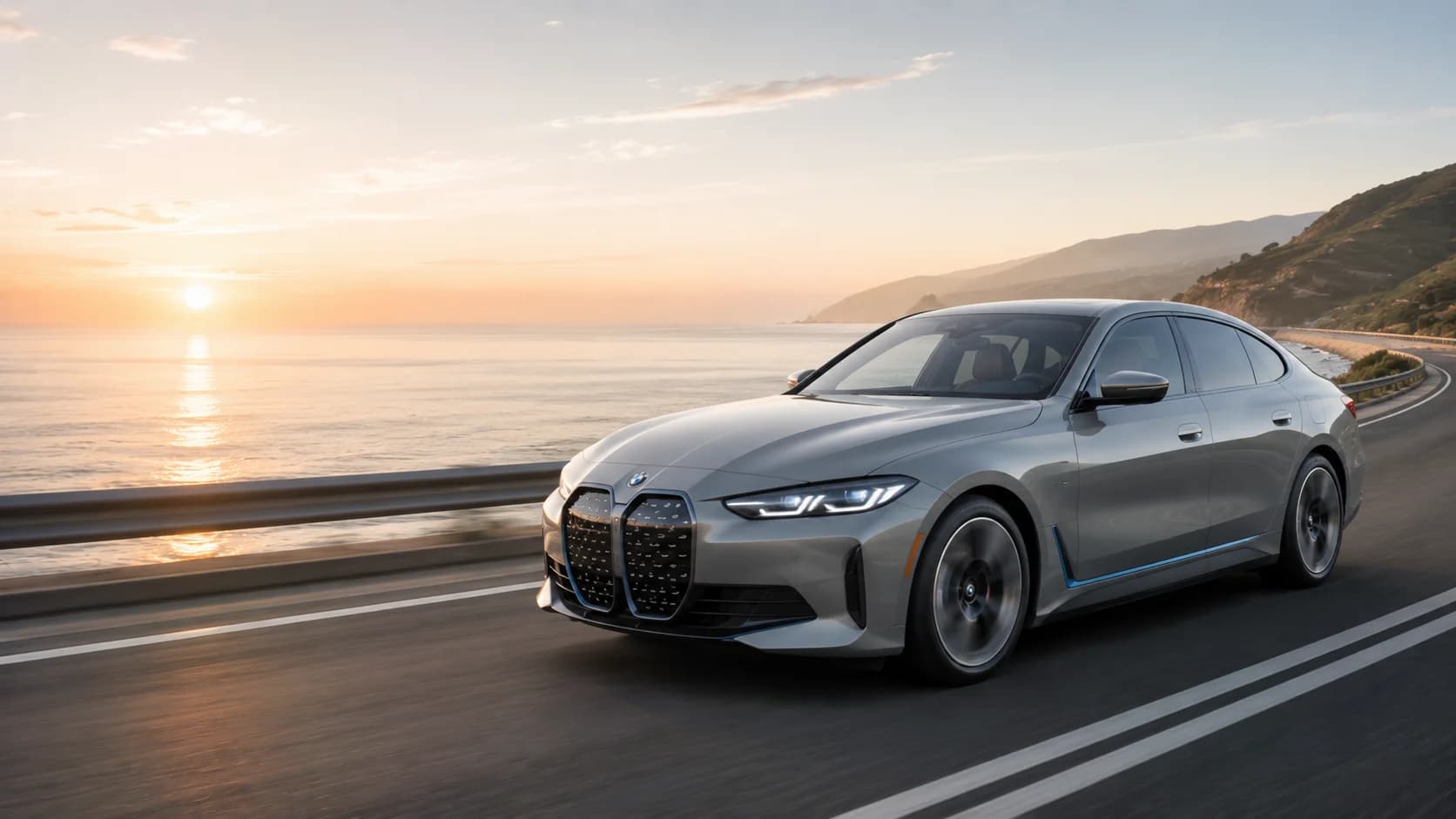
For full home speed the 2026 BMW i4 wants a 40A Level 2 charger on a 50A breaker. On a DC fast charger it does 10–80% in about 31 minutes.
→ See the full 2026 BMW i4 charging page→ What the 2026 BMW i4 really costs to own
Estimates use real battery and onboard-charger specs plus EIA residential electricity rates. Charging losses (~10–15%) are included in time figures. Public fast charging costs 2–4× the home rate.
Example: what it costs to charge a 2026 Tesla Model Y at home
At the U.S. average residential rate (~$0.18/kWh) and 15,000 miles a year, a 2026 Tesla Model Y costs about $57/month ($681/year) to charge at home — roughly $5 per 100 miles. Enter your own car, state rate, and mileage above for an exact figure.
How it works
- Cost = (miles ÷ EPA MPGe) × 33.7 kWh × your electricity rate — built from real efficiency specs, never estimated.
- Charge time uses each car's usable battery and onboard AC charger; the onboard charger caps Level 2 speed.
- Recommended breaker follows the electrical-code 80% continuous-load rule.
- Electricity rates are EIA residential averages by state; gas comparisons use AAA prices.
Frequently asked questions
- How is the home charging cost calculated?
- It comes down to three numbers: how far you drive, how efficient the car is (its EPA MPGe), and your electricity rate. Annual kWh = (miles ÷ MPGe) × 33.7, and cost = kWh × your $/kWh. The calculator defaults to the U.S. average residential rate of about 18¢/kWh, or pick your state.
- Why is charging so much cheaper than gas?
- At home, electricity costs roughly a third as much per mile as gasoline. A gas crossover at 30 mpg runs about $1,800 a year in fuel; a comparable EV charged at home is closer to $600. The gap narrows if you rely on expensive public DC fast charging, which typically costs two to four times the home rate.
- How long does it take to charge at home?
- On a standard 120V outlet (Level 1) a full charge takes a day or more — fine for topping up, slow for a full fill. A 240V Level 2 circuit (32–48A) charges most EVs overnight. The car's onboard AC charger caps the speed: beyond that limit, a bigger circuit does not charge any faster.
- What size breaker do I need to charge an EV?
- Size the circuit to the car's onboard charger. A common setup is a 48A charger on a 60A breaker, or 40A on a 50A breaker — the electrical code requires a continuous load to stay at or below 80% of the breaker rating. The calculator shows the recommended pairing for each vehicle.