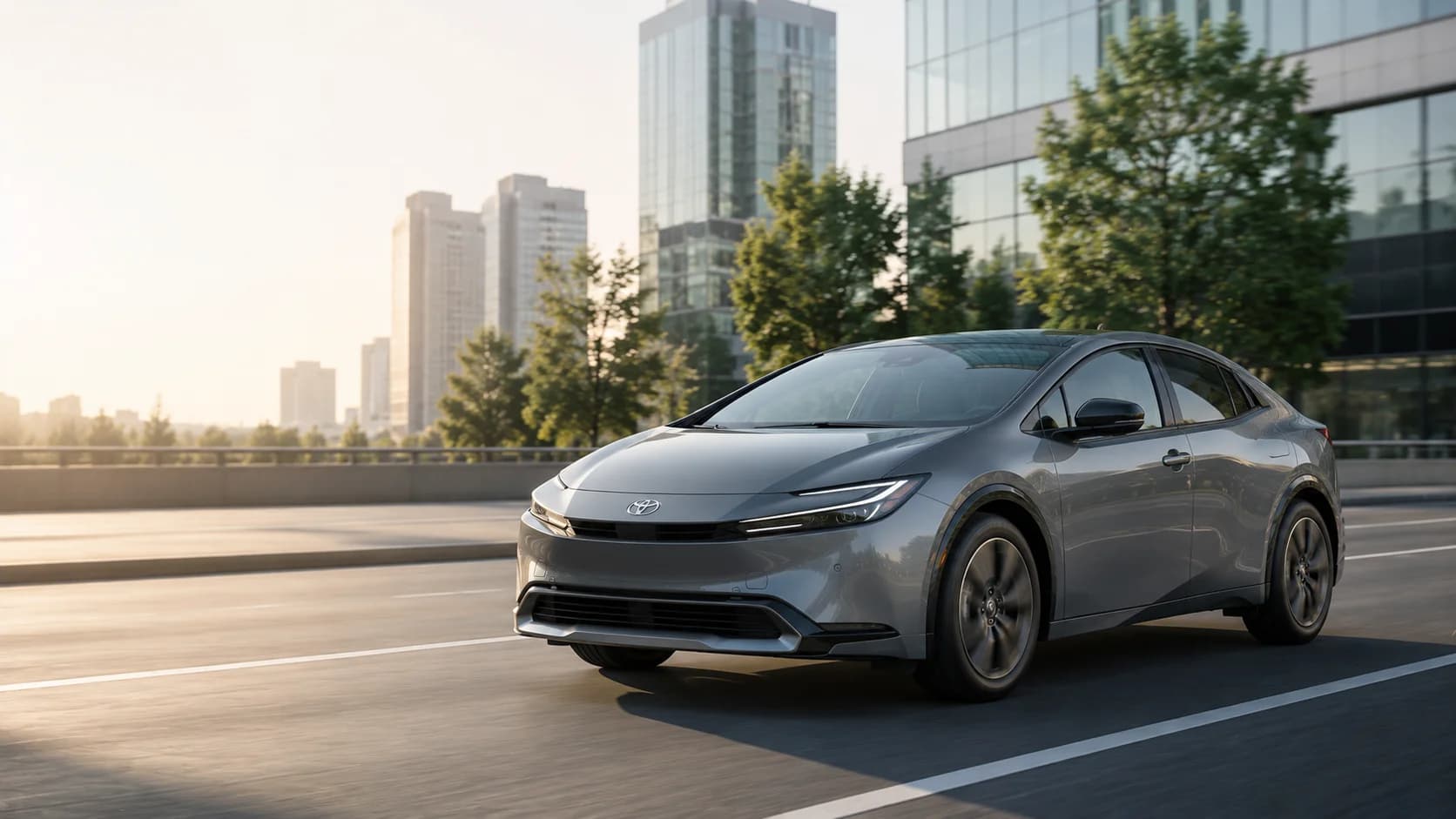
Ford Mustang 63·Toyota Prius Plug-in Hybrid 95on the MotiveGrid Score·Toyota Prius Plug-in Hybrid about $12,147 less over 5 years
The verdict
The 2026 Toyota Prius Plug-in Hybrid is the cheaper one to own — roughly $12,147 less over five years, mostly because it holds its value better. The Ford Mustang counters with more power (315 vs 220 hp).
Go with the Toyota Prius Plug-in Hybrid for the better long-term value; consider the Ford Mustang if you prioritize stronger acceleration.
Last updated May 2026 · National-average estimates
Ford Mustang vs. Toyota Prius Plug-in Hybrid
MotiveGrid scores, key specs, and five-year cost comparison: 2026 Ford Mustang versus 2026 Toyota Prius Plug-in Hybrid.
Metric
Ford Mustang
Toyota Prius Plug-in Hybrid
MotiveGrid Score
63
95
Cost of Ownership
73
88
Powertrain
52
73
Driver Assistance
16
43
Livability
36
81
Safety
93
97
5-Year Cost to Own
$51,371
$39,224
Depreciation (5-yr)
$18,656
$12,801
Fuel / Energy (5-yr)
$12,950
$5,396
Insurance (5-yr)
$9,975
$10,835
Maintenance (5-yr)
$2,490
$1,970
Tires (5-yr)
$1,550
$1,550
Financing (5-yr)
$4,815
$5,082
Registration (5-yr)
$935
$1,590
Starting Price
$32,000
$33,775
Horsepower
315 hp
220 hp
MPG (combined)
26 mpg
52 mpg
Electric range
—
44 mi
Cargo volume
13.5 cu ft
20.3 cu ft
Seating
4
5
Drivetrain
RWD
FWD
Gas
2026$32,000
MSRP
$32,000
Mo · 5yr
$856
$51,371 / 5 years
Best for lower upfront price
Plug-in Hybrid
2026$33,775
MSRP
$33,775
Mo · 5yr
$654
$39,224 / 5 years
Best for long-term savings
VS
01 · The MotiveGrid Score
Five measured pillars, weighted into one score.
Cost, Powertrain, Driver Assistance, Livability, and Safety — each scored against its class, then combined into a single MotiveGrid Score. Built by our engineering team and benchmarked against independent sources like NHTSA, IIHS, and CarEdge. How it’s calculated →
Toyota Prius Plug-in Hybrid scores higher overall.
Ford Mustang
0
/ 100
Toyota Prius Plug-in Hybrid
0
/ 100
CostFive-year all-in cost to own, benchmarked against the class median.
Mustang
73
Prius Plug-in Hybrid
88
Winner: Prius Plug-in Hybrid
$12,147 cheaper / 5 yrs
Strong projected resale value▲
PowertrainEnergy efficiency paired with long-term ownership confidence.
Mustang
52
Prius Plug-in Hybrid
73
Winner: Prius Plug-in Hybrid
+21 pts
Efficient (high MPG-equivalent)▲
Driver AssistHighway driving support, parking convenience, and hands-free automation.
Mustang
16
Prius Plug-in Hybrid
43
Winner: Prius Plug-in Hybrid
+27 pts
Strong highway driving support▲
LivabilityPassenger space, cargo room, and everyday maneuverability.
Mustang
36
Prius Plug-in Hybrid
81
Winner: Prius Plug-in Hybrid
+45 pts
Roomy cabin and cargo▲
Easy to maneuver and park▲
SafetyCrash-test protection plus standard crash-avoidance features.
Toyota Prius Plug-in Hybrid is the better pick for long-term ownership — about $12,147 cheaper over 5 years with stronger fundamentals on running cost.
Ford Mustang still wins if your priority is best for lower upfront price.
Daily commuter
Toyota Prius Plug-in Hybrid
Lowest energy cost per mile
Budget-focused
Toyota Prius Plug-in Hybrid
Cheapest to own across 5 years
Family hauler
Toyota Prius Plug-in Hybrid
Better safety rating with more cargo room and a 6th seat
Highway driver
Toyota Prius Plug-in Hybrid
Better adaptive cruise + lane keep
City driver
Toyota Prius Plug-in Hybrid
Easiest to park and maneuver in tight spots
03
Cost of Ownership
Monthly running costs — national baseline.
Adjust for your situation
State
Miles/yr15,000
Loan rate7%
Down payment20%
Charging mix
Ford Mustang
Monthly · 5-Year avg
$856
$51,371 total / 5 years
Total · monthly$856/mo
Toyota Prius Plug-in Hybrid
Monthly · 5-Year avg
$654
$39,224 total / 5 years
Total · monthly$654/mo
💡
On fuel + maintenance alone, the pricier Toyota Prius Plug-in Hybrid recoups its $1,775 price premium in 0.7 years ($2,392/yr in savings). Depreciation and insurance aren’t included in this payback view.
04
Frequently asked questions
Toyota Prius Plug-in Hybrid comes out about $12,147 cheaper over 5 years on running costs (depreciation, fuel/energy, insurance, maintenance, financing). The gap shifts with your state, annual miles, and loan rate — use the "Adjust for your situation" panel above.